
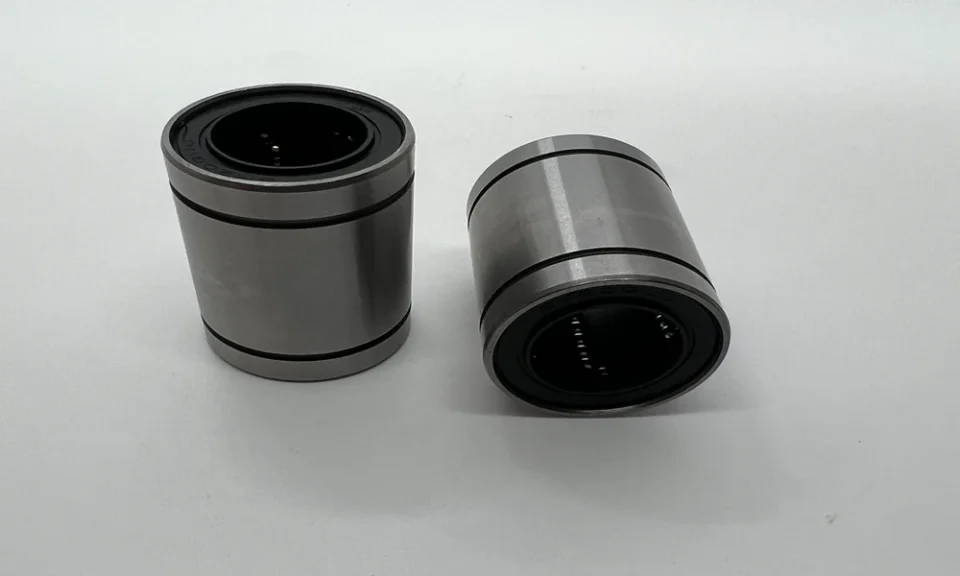
Industrial automation and precision machinery rely heavily on seamless, frictionless movement to achieve high-speed and highly accurate operations. Whether it is a CNC machine carving intricate designs, a robotic arm assembling microchips, or a 3D printer creating rapid prototypes, the underlying mechanical components must handle continuous travel without excessive wear or instability. The foundation of this reliable movement often comes down to selecting the right mechanical guidance components. When engineers design automated systems, they must account for heavy loads, repetitive strokes, and the need to reduce mechanical resistance as much as possible.
Failing to implement proper guidance mechanisms can result in severe structural degradation, intense operational noise, and ultimately, catastrophic machine failure. Understanding the foundational components that allow for smooth, unidirectional travel is absolutely essential for anyone involved in mechanical design or industrial maintenance. At the heart of these precision systems, a specialized linear motion ball bushing plays a paramount role in minimizing friction and maximizing operational efficiency across a straight plane.
Understanding the Core Mechanics of Precision Travel
To truly appreciate how modern automation achieves such high levels of accuracy, one must delve into the mechanical principles of straight-line movement. This specific mechanical component is essentially an anti-friction bearing designed specifically to travel smoothly along a hardened steel shaft. Instead of rotating in a continuous circle like standard radial bearings, it utilizes recirculating steel spheres that continuously roll in a straight circuit inside a polymeric or steel cage.
This intricate internal recirculation allows the carriage to glide effortlessly over the cylindrical shaft, absorbing significant loads while maintaining sub-millimeter precision. Because the contact area between the internal spheres and the shaft is incredibly small, the resistance is nearly nonexistent, allowing motors to drive heavy platforms with minimal energy consumption. When designing a new automated rig, integrating a high-quality linear motion ball bushing ensures that your sliding mechanisms will not bind, shudder, or degrade prematurely, even under demanding operational speeds and continuous usage cycles.
Evaluating Load Capacity and Selecting the Correct Size
Choosing the right dimensions for your mechanical assembly is a delicate balancing act that requires a thorough understanding of the physical forces your machine will encounter. Engineers must carefully calculate both static and dynamic loads, factoring in the weight of the moving carriage and the additional forces exerted during rapid acceleration or deceleration. Oversizing the components can lead to unnecessary weight and exorbitant costs, whereas undersizing them will inevitably cause structural deflection and catastrophic mechanical failure. It is crucial to measure the shaft diameter precisely, as this dictates the inner diameter of the sliding component and its corresponding load rating.
A thicker shaft paired with an appropriately sized linear motion ball bushing will drastically reduce bending under heavy vertical or lateral pressure. Furthermore, you must consider the stroke length and the spatial constraints of your machine housing to ensure the bearing block fits seamlessly without restricting the intended range of motion or interfering with adjacent mechanical parts.
Choosing the Right Material for Your Operating Environment
The physical environment in which your machinery operates dictates the metallurgical and chemical composition of the guiding components you must install. In standard clean-room manufacturing or general factory settings, high-carbon chromium bearing steel is typically sufficient, offering excellent hardness and wear resistance for everyday operations.
However, if your equipment is exposed to highly corrosive elements, extreme humidity, or chemical washdowns-such as in food processing plants or pharmaceutical facilities-standard steel will rust rapidly and seize the mechanism. In these harsh industrial environments, you must upgrade to high-grade stainless steel components or specialized anti-corrosion coatings to ensure longevity and maintain strict sanitary standards.
Additionally, the internal retainers that guide the rolling spheres come in different materials; high-impact polymer resins operate quietly for standard speeds, whereas solid steel cages are mandatory for extreme heat environments. Matching the material of your linear motion ball bushing to your environmental hazards is the only way to prevent premature degradation and costly production downtime.
Navigating the Different Types to Suit Specific Applications
Not all guiding mechanisms are constructed equally, and understanding the distinct variations available in the market is critical for optimizing your machine’s performance. The standard closed-type configuration is ideal for applications where the shaft is supported only at the ends, providing full 360-degree radial support around the cylinder.
However, for exceptionally long travel distances, the shaft must be supported continuously from underneath to prevent it from sagging under the weight of the carriage. In continuous-support scenarios, an open-type configuration is required, featuring a specific cut-out section that allows the bearing to glide over the underlying shaft supports without colliding.
Additionally, there are flanged variations that allow for direct mounting to perpendicular plates, eliminating the need for bulky housing blocks and saving precious spatial real estate in compact machine designs. Selecting the exact architectural type of linear motion ball bushing that aligns with your structural mounting strategy will simplify the assembly process and drastically enhance the overall rigidity of your automation system.
Designing and maintaining high-performance automation machinery requires a deep understanding of how every single component interacts under stress. By accurately calculating your load requirements, assessing environmental hazards for material selection, and determining the appropriate architectural type, you can engineer systems that operate flawlessly for years. Investing in premium mechanical guidance is not merely an expense, but a crucial strategy to prevent catastrophic failures, reduce maintenance intervals, and ensure maximum production uptime.
When it comes to sourcing industrial-grade automation components, partnering with a proven supplier is paramount. I.N.B stands as a trusted leader in providing top-tier mechanical solutions, offering an extensive inventory of precision-engineered parts designed to meet the rigorous demands of modern manufacturing. If you are looking to upgrade your machinery with a reliable linear motion ball bushing (known in Thai as “ลูกปืนสไลด์บนเพลาเกลี้ยง“), I.N.B provides the expertise, quality assurance, and technical support necessary to keep your operations running smoothly and efficiently without any friction.
