
Six months after his grandma passed, my neighbor Kalani finally opened the box of her handwritten recipe cards. He could read the ingredients, but he couldn’t read her shorthand. A whole lifetime of cooking knowledge, gone in a few index cards. That’s the exact problem cultural workshops on Oahu exist to solve, and it’s why I stopped treating them as weekend entertainment and started treating them as a family responsibility.
Here’s the short answer: the culture survives because people show up, in person, and learn it from someone older. That’s it. Programs built around hula, ʻōlelo Hawaiʻi, and traditional food preparation work because they put a beginner in the same room as a practitioner. If you’ve been meaning to learn, the hardest part is choosing a workshop and actually registering. So let’s sort out what’s out there, what to expect, and how to get real value out of your first session.
Why Cultural Knowledge Slips Away So Fast
Hawaiian traditions are oral by design. Chants, hula motions, food techniques, and the naming of plants all traveled from teacher to student through demonstration and repetition, not through manuals. That makes the transmission fragile. Skip one generation and you don’t lose a fact, you lose a whole method.
There’s a concept that anchors this in Hawaiian thought: the kalo, or taro plant, is considered the older sibling and the people the younger siblings. The relationship is reciprocal. You care for the land and the land feeds you. That’s not folklore filler. It’s an operating principle for how families see themselves in relation to place, and it only stays alive if kids hear it, say it, and practice it.
Federal recognition of the stakes came in 1990, when Congress designated November as Native American Heritage Month to honor the history and contributions of Native peoples. The larger framework is described by the National Park Service, which manages heritage sites and interpretive programs tied to Native history. I’d argue the official month matters less than the Tuesday night class someone actually attends. But it’s a useful reminder that cultural survival is a deliberate act, not an automatic one.
What Actually Happens in a Hawaiian Cultural Workshop
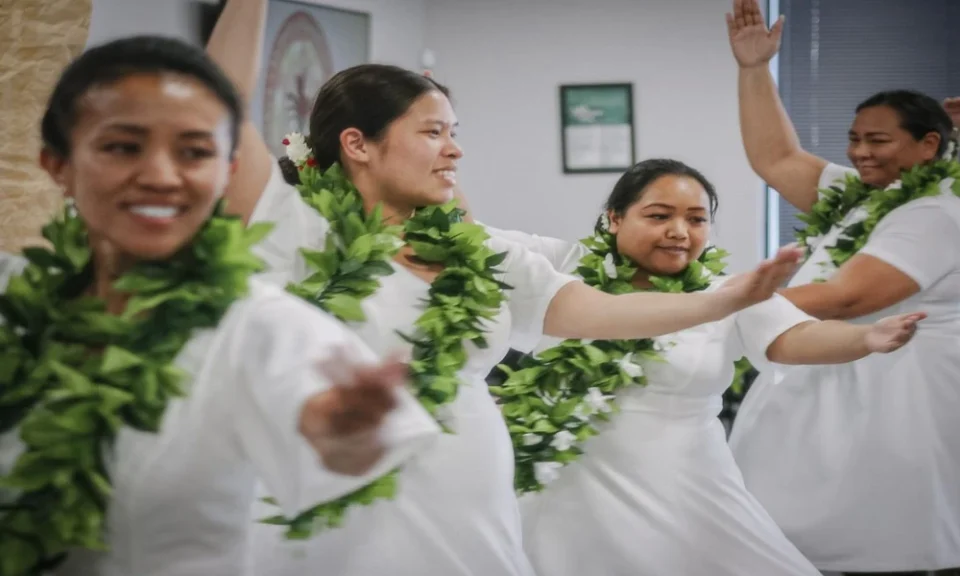
Plenty of people imagine a hula class as a performance drill. It isn’t, at least not at first. You spend a lot of your first hour learning foot placement and listening to the story behind a mele before you ever move through it. The dance is the last layer, not the first.
Language sessions work differently. ʻŌlelo Hawaiʻi classes for beginners tend to move slowly and out loud, with a heavy emphasis on pronunciation because the language distinguishes vowel lengths and glottal stops in ways English speakers aren’t used to. You will sound bad for a while. Everyone does.
Then there are the hands-on food workshops, and these are the ones I’d push a hesitant beginner toward. Hands-on beats lecture for most adult learners, and you leave with something you can eat and repeat at home.
- Lāʻau lapaʻau workshops: traditional plant-based healing practices taught as cultural knowledge, with emphasis on identification and respectful use.
- Kuʻi ʻai and kūlolo sessions: pounding taro and preparing coconut-based dishes the way they’ve been prepared for generations.
- Lomilomi for beginners: an introduction to traditional Hawaiian bodywork as a cultural practice, taught in a structured class setting.
- Hula and mele: movement paired with chant, story, and language.
- Ka mahina: the Hawaiian lunar calendar, which guided planting, fishing, and gathering.
Notice that none of these are spectator activities. You’re using your hands, your voice, or your whole body. That’s the point.
Picking the Right Workshop for Your ʻOhana
Not every class suits every household, and this is where I’d skip casual browsing and ask a few blunt questions before you register.
Ask whether the session is in person or over Zoom. Both exist, and both are legitimate, but they deliver different things. A Zoom hula class teaches you the sequence. An in-person class teaches you the sequence plus how it feels to move alongside other people, which is closer to how the tradition actually functioned.
Ask who it’s for. Some workshops are built for adults, some for keiki, and some are explicitly designed for parents and children learning side by side. If your goal is to get your kids engaged, a parent-child format will beat a solo adult class every time.
Ask about frequency. A one-off workshop is a nice afternoon. A recurring series is where things stick, because the second session is when your hands remember what your brain forgot.
And here’s the honest part: cost and scheduling trip up more families than motivation does. Many community workshops are offered at low or no cost through nonprofit and grant-funded programs, and a lot of them run in the evening or on weekends for exactly that reason. If you’re looking at family programs in Oahu, check the calendar before you plan your month. Classes fill, and a few fill fast.
A Simple Plan for Your First Season
If you’re starting from zero, don’t sign up for five things. I’d do this instead:
- Pick one recurring language class. Show up every single week for a few months. Consistency beats intensity here.
- Add one hands-on food workshop within the first month. You’ll learn vocabulary and technique at once, and you’ll have something to bring home.
- Bring a family member to the third class. Nobody learns a culture alone, and the older person in your group usually has corrections that matter.
- Write down what you learned while it’s fresh. Audio notes are fine. This is how you avoid the recipe-card problem.
That’s a small commit. It’s also enough to change what your household knows in a year.
The Detail Most People Overlook
The culture doesn’t live in the class. It lives in the twenty minutes after class ends, when someone stays behind to ask a question or an instructor pulls out a different example because the room is small enough to accommodate it. Try reproducing that dynamic with a video playlist.
This is why I keep going back to the in-person format. There’s a documented reason cultural knowledge persists through community participation, and it shows up plainly in how the Library of Congress preserves and documents traditional cultural practices through its collections and folk life work: the record matters, but the practice is what keeps it current. You can archive a chant. You can’t archive the room.
One more thing worth understanding. Oahu’s population is genuinely diverse, and the island’s cultural calendar reflects that. The U.S. Census Bureau tracks the demographic makeup of Hawaii and the rest of the country, which is a reminder that the people learning these traditions today are not a single group. They’re newcomers, longtime residents, mixed families, and people reconnecting with a heritage that got interrupted somewhere in their own family line. All of them are welcome to learn, and honestly, that’s the healthiest version of cultural survival I can imagine.
Start With One Class
You don’t need permission, a background in Hawaiian studies, or a child in the right age bracket to begin. You need a calendar, a free evening, and enough humility to be bad at something in public for a few weeks. That’s the whole barrier.
The traditions on this island survived because ordinary people chose to keep showing up, generation after generation, in rooms with real teachers and real kalo and real mistakes. Your household can be part of the next link in that chain. The only question left is which class you’re registering for this month, and who you’re bringing with you.
