
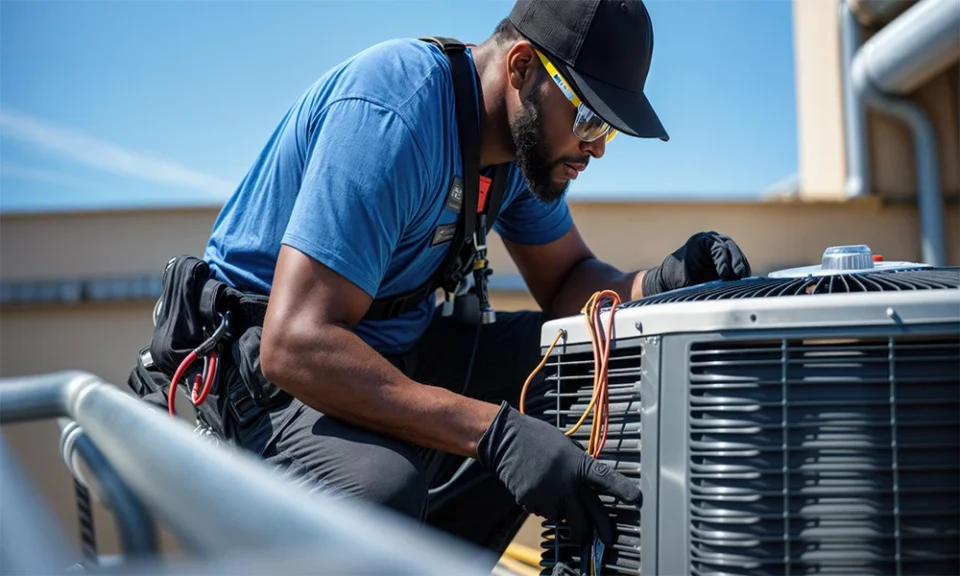
Your neighbor in Ohio is still running the same AC unit she bought 18 years ago. Yours is eight years old and already making a noise that sounds like a bag of gravel in a dryer. You’re not doing anything wrong. Florida just plays by different rules, and most homeowners don’t find that out until the system fails on a 96-degree afternoon in July.
The gap between what people expect from an AC and what Florida actually delivers to one is significant. Understanding why that gap exists, what it costs you, and when to act is the most practical thing you can do before the next summer peak hits your equipment hard.
Florida Runs Its AC Like a Second Job
In most of the country, an air conditioner is a seasonal appliance. Northern homes shut theirs off sometime in September and don’t touch it again until May. That seasonal rest is not trivial. Components cool down, pressures equalize, and the compressor gets a real break. According to the U.S. Census Bureau’s Local Air Conditioning Estimates, more than nine out of ten U.S. households have air conditioning , but most of those systems spend several months per year doing nothing at all.
Florida homeowners do not get that courtesy. Your system runs ten to twelve months out of the year. Florida AC units operate two to three times more hours annually than systems in other parts of the country, enduring extreme humidity, intense UV exposure, and, in coastal areas, corrosive salt air. That is not wear and tear. That is a different category of demand entirely.
The physics are straightforward. Your AC removes heat from inside your home and dumps it outside. During a heat wave, that process becomes much harder because the outdoor condenser is trying to reject heat into air that is already extremely hot, and Florida’s high humidity makes the situation even more demanding. Your compressor is not jogging. It is sprinting, and it does that all summer without a real rest between sessions.
The Sarasota Stress Multiplier: Four Forces Working Against Your System
Most discussions of AC lifespan treat Florida like one uniform place. Sarasota and the broader Gulf Coast are actually harder on equipment than inland parts of the state. Call it the Sarasota Stress Multiplier: four overlapping forces that compress your system’s useful life faster than any single factor could alone.
Salt air corrosion. Sarasota sits on Sarasota Bay and the Gulf of Mexico. Salt-laden air attacks outdoor condenser coils, copper refrigerant lines, and electrical connections. The damage is invisible until it isn’t. A coil that looks fine from ten feet away may be pitting along the fins, which accelerates refrigerant leaks and compressor overwork.
Humidity load. Your AC does two jobs at once in Florida: it cools the air and it removes moisture. That dual load means the evaporator coil, the drain pan, and the condensate drain line are under continuous stress. Most homeowners have no idea how much of their system’s runtime goes toward dehumidification rather than cooling.
UV degradation. Florida gets intense direct sun nearly year-round. Wiring insulation, refrigerant line jackets, and outdoor plastic components degrade faster under UV than they do in temperate states. This is the damage type that shows up as random electrical failures rather than obvious mechanical wear.
Extended runtime in peak conditions. Unlike milder spring weather, an AC may run for 10 to 14 hours or more during an extreme summer day in Florida. When that happens week after week through June, July, and August, hidden wear becomes visible failure in a matter of days.
Stack those four together and you get a unit that can hit its operational ceiling years ahead of schedule. The International Association of Certified Home Inspectors estimates the lifespan of air conditioners in Florida at just 5 to 12 years , well below the 15-to-20-year national benchmark you may have in your head.
What the Energy Numbers Actually Tell You
There’s a number worth putting in context here. The U.S. Energy Information Administration estimates that 18% of annual household electricity use goes toward air conditioning. That’s the national average, and Florida blows well past it. According to EIA’s 2023 Residential Energy Consumption Survey, Florida households use more electricity for air conditioning than those in any other state, averaging more than 2,100 cooling degree days annually, a figure that has trended upward for three consecutive measurement cycles.
Cooling degree days are a direct proxy for compressor runtime. More cooling degree days means more hours of operation, more heat rejection stress, and more component fatigue per calendar year. If your system was designed around a national average and you live in Sarasota, it is working outside the assumptions baked into its rated lifespan from day one.
That gap between design assumptions and real conditions is exactly why so many Florida homeowners describe the same experience: the unit worked fine yesterday and quit on the hottest afternoon of the summer. According to technicians at a St. Petersburg-based HVAC company, that is one of the most common calls they receive during peak summer months. While these breakdowns feel sudden to homeowners, cooling experts say extreme heat acts like a stress test, pushing hidden, slow-developing issues past their breaking point.
“The system keeps running until extreme heat leaves zero margin for error. That is why emergency calls spike in the hottest weeks of summer instead of early spring.” – Mitch Orta, HVAC technician, St. Petersburg, FL, as reported by EINPresswire, July 2026
The Repair-or-Replace Decision Table for Gulf Coast Homeowners
Once your system starts showing symptoms, the real question is whether a repair buys you meaningful time or just delays the inevitable. Here is a framework built around Florida-specific age thresholds, not national averages.
| System Age (Florida) | Repair Cost Threshold | Recommended Action |
|---|---|---|
| Under 6 years | Any repair cost | Repair. System is still in prime working life. |
| 6 to 9 years | Under $800 | Repair, but schedule a full diagnostic to assess overall condition. |
| 6 to 9 years | Over $800 | Get a replacement quote before committing to the repair. |
| 10 years or older | Any significant repair | Strong lean toward replacement. Parts costs will recur. |
| Coastal home, any age | Corrosion on coils or lines | Prioritize replacement planning. Salt damage compounds fast. |
These thresholds lean conservative compared to national guides, and intentionally so. A nine-year-old system in Sarasota has more operational hours on it than a 14-year-old system in Minneapolis. Age on the calendar is not the same as age on the components.
Five Practical Steps to Extend Your System’s Life
You cannot change the climate. You can change the maintenance schedule, and that is where the real lifespan difference gets made. What changes the outcome is not luck. It is whether the system has been maintained consistently enough to catch the small failure before it becomes a full replacement conversation.
- Schedule professional service twice a year, before peak summer and again in October. One visit in spring is not enough in a Florida climate.
- Rinse the outdoor condenser coil with a garden hose monthly during summer. Salt air deposits build fast on Gulf Coast units.
- Replace your air filter every 30 days, not 90. A dirty filter raises static pressure and forces your blower motor to work harder than it should.
- Keep the area around your outdoor unit clear of at least 18 inches on all sides. Restricted airflow raises discharge pressure and pushes compressor temperatures up.
- If your system is seven years old or older, ask your technician to test the capacitors at every visit. Capacitors fail under heat stress before most other components, and catching a weak one costs far less than dealing with a full compressor failure afterward.
And when something does go wrong, speed matters. The U.S. Census Bureau’s 2026 air conditioning research reinforces just how central working AC has become to household safety in high-heat states. Waiting a day or two in peak summer heat is not just uncomfortable. It puts your home well above what the system was designed to maintain at that point in its life, compounding the damage to remaining components. That is when calling for emergency AC repair in Sarasota residents trust becomes the right move rather than a last resort.
The Takeaway Is Simple, Even If the Problem Isn’t
Florida demands more from an AC than anywhere else in the country. Salt air, near-constant humidity, brutal UV exposure, and runtime that would wear out any machine faster than its design assumed. Knowing that should change how you think about maintenance, how you interpret warning signs, and how you make the repair-or-replace call when the moment arrives.
Your system is not defective. It is just working harder than you may realize. The question is whether you get ahead of that workload or let it find you on the hottest afternoon of the year.
