
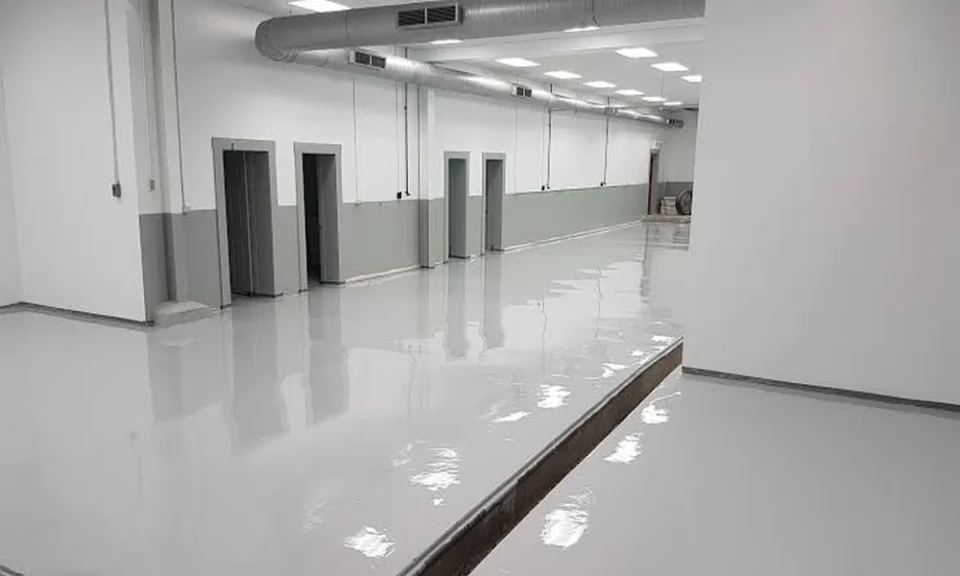
A forklift aisle wears at a rate of roughly one recoat every three years in a busy distribution center, and the downtime cost usually dwarfs the coating price. That math is why floor decisions stall. You aren’t really buying a finish. You’re buying a schedule.
Most facility managers I’ve talked to don’t regret the coating they picked. They regret the week the plant ran at half capacity because the crew needed three passes to finish one bay. Cure speed is the variable that decides whether your floor project is an inconvenience or a line-item disaster.
That’s where polyurea commercial floor coating services earn their reputation. The chemistry sets fast, which means a single crew can lay a full system and return the space to service far sooner than the older epoxy schedules allowed. Here’s how to think through the decision before anyone shows up with a grinder.
What actually drives your downtime cost?
Walk your floor before you call a single contractor. Count the hours your operation loses per day of a closed bay. Multiply by the footprint that needs coating. Most teams find the coating budget is the smaller number by a wide margin, and that reframing changes which bids look reasonable.
Then separate two things that get lumped together: cure time and return-to-service time. A product can be dry in an hour and still sit unusable for a day because the crew needs to apply a topcoat, add flake, or wait on a moisture reading.
Ask each bidder one blunt question. How many days until a loaded forklift can roll across this section? If the answer is vague, that’s your answer.
Match the coating to the room, not the building
A single spec across an entire facility is how you overspend in the break room and underspend in the wash-down zone. Break your building into four buckets and treat each one differently.
- Traffic and abrasion zones: aisles, staging, and dock aprons where wheels and pallets grind daily.
- Wet or chemical zones: wash-down areas, food prep, and laundry rooms where standing water sits.
- Thermal shock zones: rooms that see hot water or steam hit a cold slab.
- Curb appeal zones: customer-facing lobbies and entrances where appearance matters as much as wear.
Polyurea systems tend to fit the first three buckets well because they handle impact and moisture with fewer coats than a standard epoxy build. Epoxy still wins in some decorative settings where you want a slower, more forgiving application window for a flake blend.
My honest take: if the space sees forklifts or wash-down, pick the faster-curing chemistry and spend your savings on better surface prep. Prep fails more floors than product does.
The prep work you probably don’t want to hear about
Every coating failure I’ve seen traced back to the slab, not the bucket. Moisture vapor pushing up through concrete will blow a coating off no matter what the label promises. The U.S. military has spent decades studying this exact problem in its facilities, and the Defense Technical Information Center keeps a large body of research on slab moisture, coating adhesion, and concrete surface preparation that’s worth skimming before you sign anything.
Here’s the practical version. Your contractor should test for moisture, profile the surface mechanically, and fix spalling and cracks before any resin goes down. If a bid skips those steps to hit a lower price, the savings are a loan you’ll repay in two years with a full tear-out.
Ask to see how they plan to handle joints. Saw-cut joints move, and a rigid coating bridging them will crack. The good crews honor the joints, fill them, or design the layout so traffic never rides the seam.
A scheduling framework that keeps the plant running
I call this the bay-by-bay handoff. You phase the work so the crew finishes one zone, cures it, and returns it to service while the next zone starts. It works well with fast-curing systems because the cured section frees up quickly.
Run it in five moves:
- Map your traffic flow and identify the bays that can close without stopping outbound shipping.
- Sequence zones from least critical to most critical, so early lessons tighten the later phases.
- Schedule the most disruptive prep (grinding, shot blasting) for off-shift hours.
- Confirm return-to-service windows in writing for each phase, not just for the whole job.
- Keep a punch-list walk for the end of every zone, before the next one starts.
The real texture of this shows up around week two. Crews get faster, the facility gets used to the rhythm, and the schedule that felt impossible on paper starts to look routine. The failure mode is starting in the busiest bay first, when everyone is still learning the space.
Safety and code questions to settle early
Slip resistance is a spec item, not a marketing phrase. Wet areas and kitchens need a measurable coefficient of friction, and you should confirm the topcoat texture before install rather than after a near-miss.
If your facility handles food, check what your inspector expects for cleanability, coving at wall bases, and floor drainage. Sealed, seamless surfaces clean faster and leave fewer harborage points for soil, which matters in any operation that answers to a health code.
Labor conditions shape the wider build too. According to baseline data from the Bureau of Labor Statistics, specialty trade contractors make up one of the larger segments of construction employment, which means good flooring crews book out weeks ahead. Lock your dates before you commit to a shutdown window.
Environmental and VOC rules worth checking
Coating products fall under federal and state rules on volatile organic compounds, and those rules vary by region. The Environmental Protection Agency maintains the national picture on VOC regulation, so confirm what applies in your jurisdiction, then ask your contractor for the product data sheet and safety data sheet for every component.
Two details matter for an occupied building. Low-odor formulas let you coat near work areas without evacuating staff. Proper ventilation during cure protects the crew and anyone working adjacent. Neither is optional, and neither should cost extra.
What to put in the bid request
Write the scope so bids compare cleanly. List the square footage per zone, the return-to-service window you require, the surface prep standards, the slip resistance target, and the warranty terms. Require a moisture test result and a written schedule with phase dates.
Then ask one more question: what happens if a section fails inside the warranty period? A good answer names the remedy and the timeline. A hand-wave tells you everything.
The floor under your operation is a capital asset with a maintenance schedule attached. Treat it that way and the bids get sharper, the downtime shrinks, and you stop picking coatings on color charts alone. Which bay in your facility could you actually afford to close next month?
