
One of the most common questions we get from dog owners at Douglas Animal Hospital is deceptively simple: how often should I actually bring my dog in? The answer depends almost entirely on where your dog is in life. A four-month-old Lab puppy and a ten-year-old Golden Retriever have very different bodies, very different risks, and very different needs when it comes to veterinary care. Yet a surprising number of pet owners in the Osseo area are still operating under the assumption that one visit a year covers it, regardless of age.
That’s sometimes true. And sometimes it’s not nearly enough.
The visit schedule that makes sense for your dog shifts as they move through life, and understanding why can save you money, stress, and in some cases, years with your pet.
Puppies: The First Year Is Front-Loaded for a Reason
Puppy visits are more frequent than any other life stage, and there’s no way around it. Between 8 and 16 weeks of age, your puppy needs a series of core vaccinations given at specific intervals to build reliable immunity. These typically include distemper, parvovirus, adenovirus, and rabies. The shots can’t be given all at once because maternal antibodies from nursing interfere with the vaccine’s ability to trigger a proper immune response. So we stagger them, usually in three to four rounds spaced about three to four weeks apart.
That means most puppies visit us at least three or four times before they’re four months old.
But vaccinations aren’t the only reason for those early visits. Each appointment is also a full physical exam. We’re checking for congenital issues like heart murmurs, umbilical hernias, and retained baby teeth. We’re evaluating growth patterns and talking with owners about nutrition, since feeding a large-breed puppy the wrong diet during their rapid growth phase can contribute to orthopedic problems later. We discuss parasite prevention, typically starting heartworm and flea/tick protection early, and we talk through spay or neuter timing based on the individual dog’s breed, size, and development.
These visits also give us a behavioral baseline. Puppies that come into the clinic regularly during those early months tend to handle vet visits with much less stress as adults. That’s not a small thing. A dog that panics at the vet is harder to examine thoroughly, which means problems are easier to miss.
Adult Dogs: Why the Annual Exam Still Matters
Once your dog hits about one year old (or closer to two for large and giant breeds), you’re generally looking at one wellness visit per year. This is the stage where some owners start to wonder whether annual exams are really necessary, especially if the dog seems perfectly healthy.
Here’s the thing: dogs are remarkably good at hiding discomfort. By the time you notice behavioral changes at home, like reluctance to jump on the couch, a subtle shift in appetite, or drinking more water than usual, the underlying issue may have been developing for months. Annual exams exist specifically to catch what you can’t see from the living room.
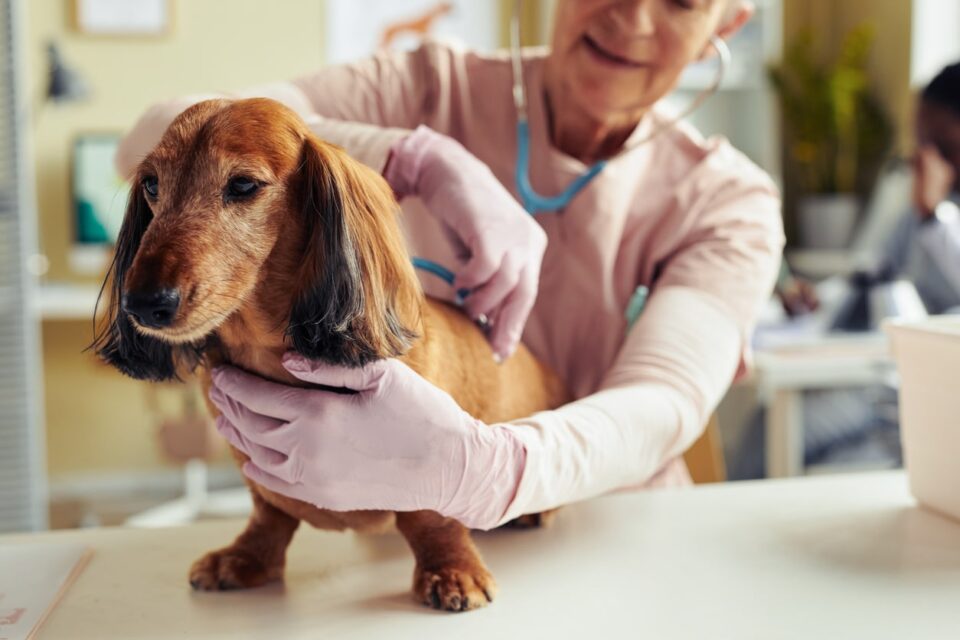
At Douglas Animal Hospital, a routine wellness exam for an adult dog covers more ground than most people expect. We assess body condition and weight trends over time, which is one of the earliest indicators of metabolic or endocrine issues. We palpate the abdomen, check joint range of motion, examine the ears, eyes, and oral cavity, and listen to the heart and lungs. We review your dog’s parasite prevention and vaccination status, updating anything that’s due.
We also run baseline lab work at intervals during this stage, even on dogs that appear healthy. A complete blood count and chemistry panel can reveal early kidney changes, liver enzyme elevations, or blood sugar abnormalities long before symptoms show up. That early detection window is where you gain the most treatment options and the best outcomes.
For dogs in the one-to-seven age range with no known health concerns, annual visits are the standard recommendation from the American Veterinary Medical Association (AVMA). But that schedule assumes no red flags pop up between appointments. If your dog starts limping, vomiting repeatedly, losing weight, or showing any sudden behavioral change, don’t wait for the annual visit.
Senior Dogs: When Once a Year Isn’t Enough
This is where the visit schedule needs to tighten up, and it’s also where the most preventable problems slip through the cracks.
Most veterinarians consider dogs “senior” starting around age seven, though the threshold varies by size. A Great Dane at six is aging faster internally than a Miniature Poodle at eight. Once your dog crosses into the senior category, we recommend shifting from annual to semi-annual wellness exams, meaning every six months.
The reason is straightforward. Age-related diseases progress faster in dogs than in humans, partly because their lifespans are compressed. Six months in a senior dog’s life is roughly equivalent to two or more human years, depending on the breed. A lot can change in that window. Kidney disease, diabetes, Cushing’s disease, hypothyroidism, arthritis, and various cancers all become increasingly common, and many of them develop quietly.
Semi-annual visits for senior dogs at our Osseo clinic typically include more comprehensive lab work than what we run on younger adults. We’re looking at kidney values (BUN and creatinine), thyroid hormone levels, urinalysis, and sometimes chest or abdominal imaging depending on what the physical exam and bloodwork suggest. For dogs with known conditions, these visits also let us adjust medications and monitor treatment response more closely.
One thing that catches many owners off guard: cognitive decline is real in older dogs. If your senior dog starts pacing at night, staring at walls, forgetting housetraining, or seeming disoriented in familiar spaces, these are signs of canine cognitive dysfunction, not just “getting old.” Bringing it up during a wellness visit gives us the chance to discuss management strategies early, when they’re most effective.
What a Wellness Visit Actually Prevents
The value of routine veterinary care is hard to appreciate when nothing seems wrong. But the math tells a clear story. Treating early-stage kidney disease with diet changes and monitoring is a fraction of the cost, both financially and emotionally, of managing renal failure after it’s progressed. A dental cleaning that catches an infected tooth before it abscesses prevents pain, systemic infection, and a more invasive extraction later. Identifying a heart murmur at a routine exam gives you and your veterinarian time to plan, rather than reacting to an emergency.
Preventive care isn’t about running unnecessary tests. It’s about building a continuous health record for your dog so that when something does change, we catch it against a known baseline rather than guessing.
Schedule Your Dog’s Next Wellness Exam at Douglas Animal Hospital
Whether your dog is a new puppy just starting their vaccine series or a senior who hasn’t been seen in over a year, the team at Douglas Animal Hospital in Osseo is here to help you build the right care schedule. Call us at (763) 424-3605 or book an appointment through our website. Your dog’s next visit doesn’t have to be complicated. It just has to happen.
